Landmarks of Saudi Arabia: Sacred Sites, Ancient Civilizations, and Natural Wonders
The landmarks of Saudi Arabia reflect the Kingdom’s unique position as the heart of the Islamic world and a land of ancient civilizations and dramatic landscapes. From sacred holy cities to prehistoric sites, desert wonders, and modern urban icons, Saudi Arabia’s landmarks tell a story that spans thousands of years.
Makkah: The Spiritual Heart of Islam
The holy city of Mecca is the most sacred place in Islam. At its center stands Masjid al-Haram, home to the Kaaba, toward which Muslims around the world pray. Millions of pilgrims visit Mecca each year to perform Hajj and Umrah, making it one of the most spiritually significant landmarks on Earth.
Madinah: City of the Prophet
The city of Medina holds deep religious importance as the home of the Al-Masjid an-Nabawi, which contains the tomb of the Prophet Muhammad. Medina is a place of peace, reflection, and early Islamic history.
AlUla and Hegra: Ancient Arabia Revealed
The oasis region of AlUla is home to Hegra (Madā’in Ṣāliḥ), Saudi Arabia’s first UNESCO World Heritage Site. Featuring monumental rock-cut tombs built by the Nabataeans, Hegra reveals the Kingdom’s role in ancient trade routes and pre-Islamic civilization.
Diriyah: Birthplace of the Saudi State
Located near Riyadh, Diriyah is the birthplace of the first Saudi state. The At-Turaif district showcases traditional Najdi architecture built from mud brick and stands as a symbol of Saudi political and cultural heritage.
Riyadh: Capital of Tradition and Modernity
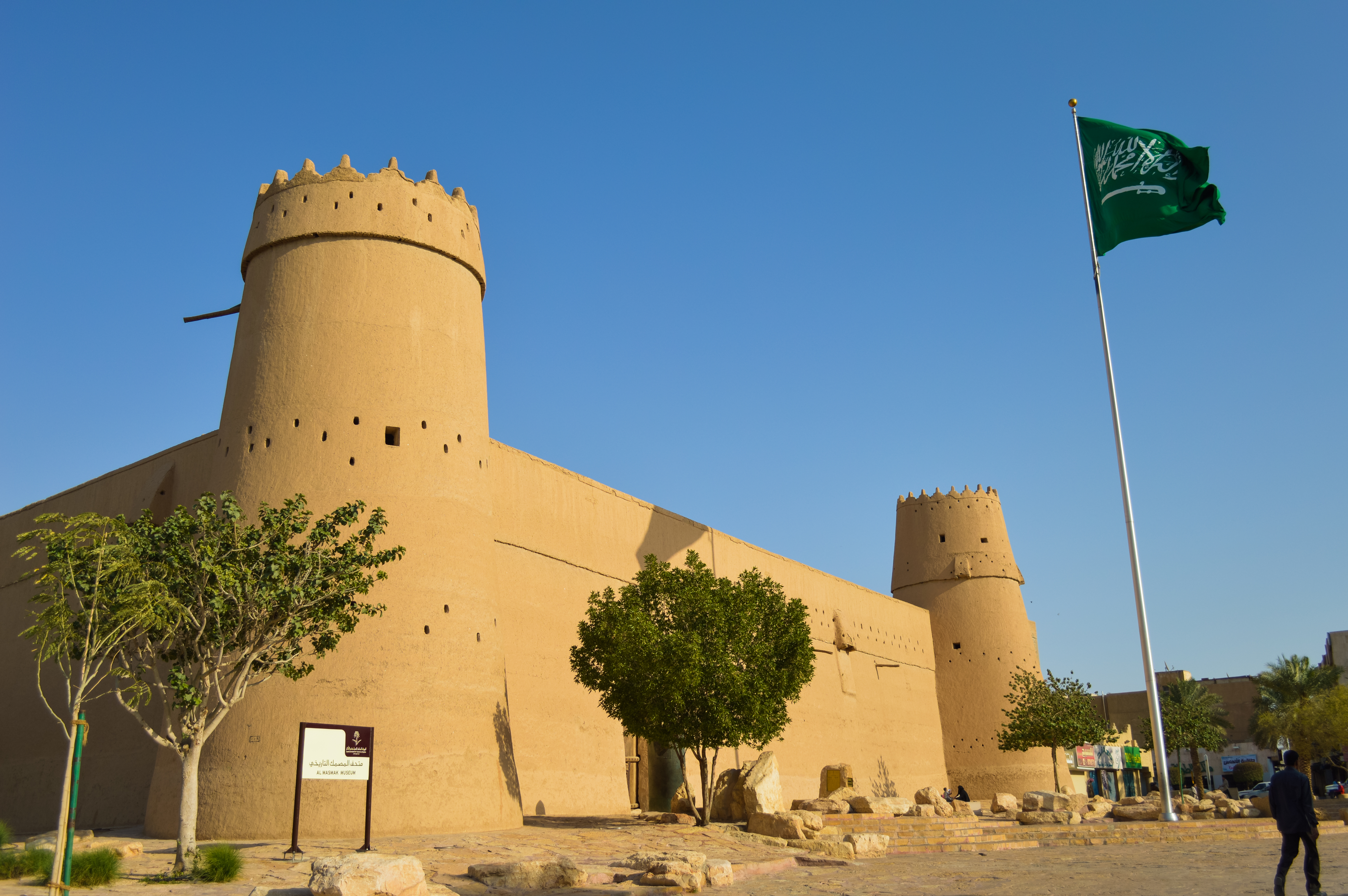
The capital city of Riyadh blends history and modern ambition. Landmarks such as Masmak Fort—where the modern Saudi state began—stand alongside contemporary icons like the Kingdom Centre Tower, reflecting Saudi Arabia’s rapid development.
Jeddah Historic District (Al-Balad)
Jeddah has long served as the gateway for pilgrims traveling to Mecca. Its historic district, Al-Balad, features coral-stone houses with wooden balconies (rawashin) and reflects centuries of Red Sea trade and multicultural exchange.
Natural Landmarks: Desert, Sea, and Mountains
Saudi Arabia’s natural landmarks are as striking as its historical ones. The Rub‘ al Khali (Empty Quarter) is the world’s largest continuous sand desert, while the dramatic cliffs of the Edge of the World offer breathtaking views. The Asir Mountains provide lush highlands, and the Red Sea coastline is renowned for pristine coral reefs.
Conclusion
Saudi Arabia’s landmarks reflect a land of deep faith, ancient civilizations, and extraordinary natural beauty. From the sacred mosques of Mecca and Medina to Nabataean tombs, historic towns, and vast deserts, the Kingdom offers a profound journey through spiritual, cultural, and natural history. As Saudi Arabia opens more of its heritage to the world, its landmarks continue to inspire awe and understanding across civilizations.
If you’d like, I can shorten this for a tourism landing page, create a UNESCO-only version, or produce matching landmark articles for other Gulf or Arab countries with the same tone and structure.