
Tunis Landmarks

Landmarks of Tunisia: A Journey Through Time and Civilization


The landmarks of Tunisia reflect over three thousand years of human civilization. From Phoenician ports and Roman cities to Islamic centers and desert architecture, Tunisia’s historical sites reveal a country shaped by trade, faith, empire, and cultural exchange at the crossroads of Africa and the Mediterranean.
Carthage: Legacy of an Ancient Empire


Founded in the 9th century BCE, Carthage was once one of the greatest powers of the ancient Mediterranean. Established by the Phoenicians, Carthage grew into a maritime empire before falling to Rome. Today, its ruins—especially the Antonine Baths—overlook the sea, offering a powerful reminder of Tunisia’s ancient global influence.
El Djem Amphitheatre: Roman Grandeur in Africa


The El Djem Amphitheatre is one of the largest and best-preserved Roman amphitheaters in the world. Built in the 3rd century CE, it once held tens of thousands of spectators and stands as a symbol of Roman architectural mastery in North Africa.
Kairouan: Heart of Islamic Tunisia


Founded in the 7th century, Kairouan is one of the holiest cities in Islam. The Great Mosque of Kairouan is among the oldest and most influential mosques in the Islamic world, shaping religious architecture across North Africa and Andalusia.
The Medina of Tunis: Living History


The Medina of Tunis, a UNESCO World Heritage Site, is a vibrant maze of mosques, palaces, madrasas, and souks. Anchored by the Zitouna Mosque, the medina reflects centuries of Arab-Islamic urban life and remains a living center of trade and craftsmanship.
Dougga: A Roman City Frozen in Time


Perched on a hilltop, Dougga is one of the best-preserved Roman towns in North Africa. Temples, theaters, baths, and paved streets reveal daily life in a provincial Roman city, surrounded by sweeping views of the Tunisian countryside.
Sidi Bou Said: Art, Sea, and Inspiration


The village of Sidi Bou Said is famous for its white-and-blue architecture overlooking the Mediterranean. Long associated with artists and writers, it represents Tunisia’s artistic spirit and Mediterranean charm.
Sahara and Southern Architecture


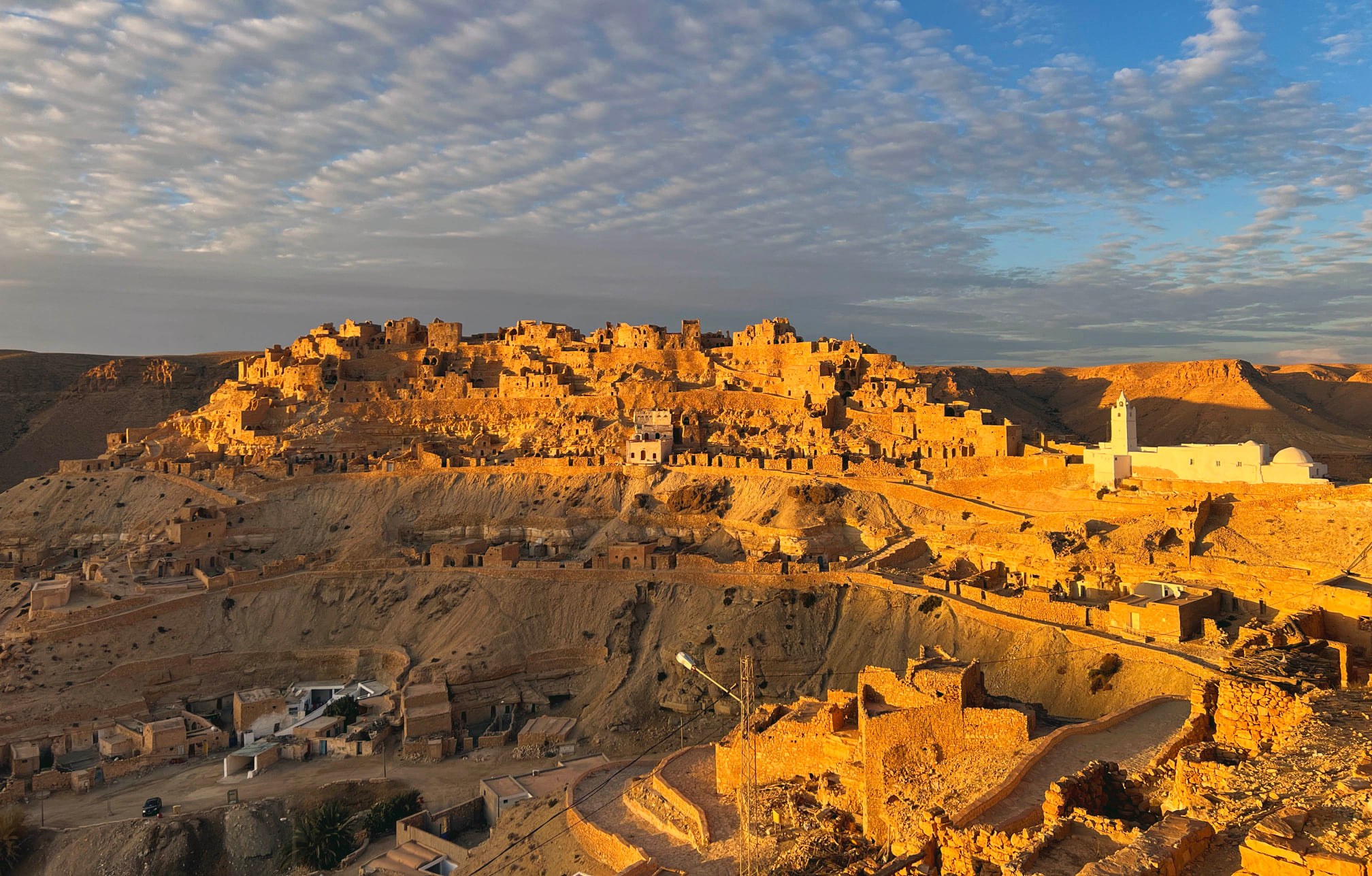
Southern Tunisia showcases a different architectural heritage shaped by desert life. Ksour (fortified granaries), cave dwellings, and oasis towns demonstrate ingenious adaptation to harsh environments. These landscapes reveal the deep connection between people, land, and survival.
Bardo National Museum


Located in Tunis, the Bardo National Museum houses one of the world’s finest collections of Roman mosaics, along with artifacts from Punic, Islamic, and Ottoman periods—making it an essential gateway to understanding Tunisia’s layered history.
Conclusion
Tunisia’s landmarks tell the story of civilizations that rose, flourished, and left lasting legacies. From the ruins of Carthage to the mosques of Kairouan, from Roman amphitheaters to Saharan villages, Tunisia offers an open-air museum where history, culture, and landscape converge.
If you’d like, I can shorten this for a tourism landing page, add an interactive map structure, or create matching landmark articles for other Arab or Maghreb countries with the same style and tone.